
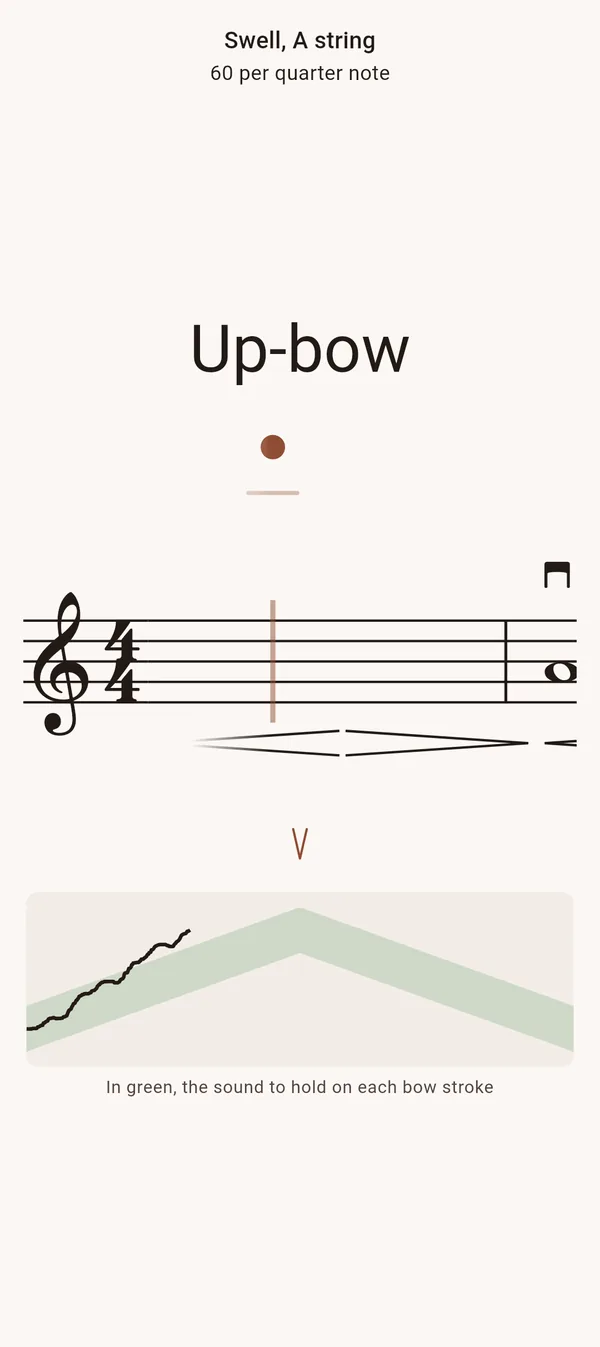
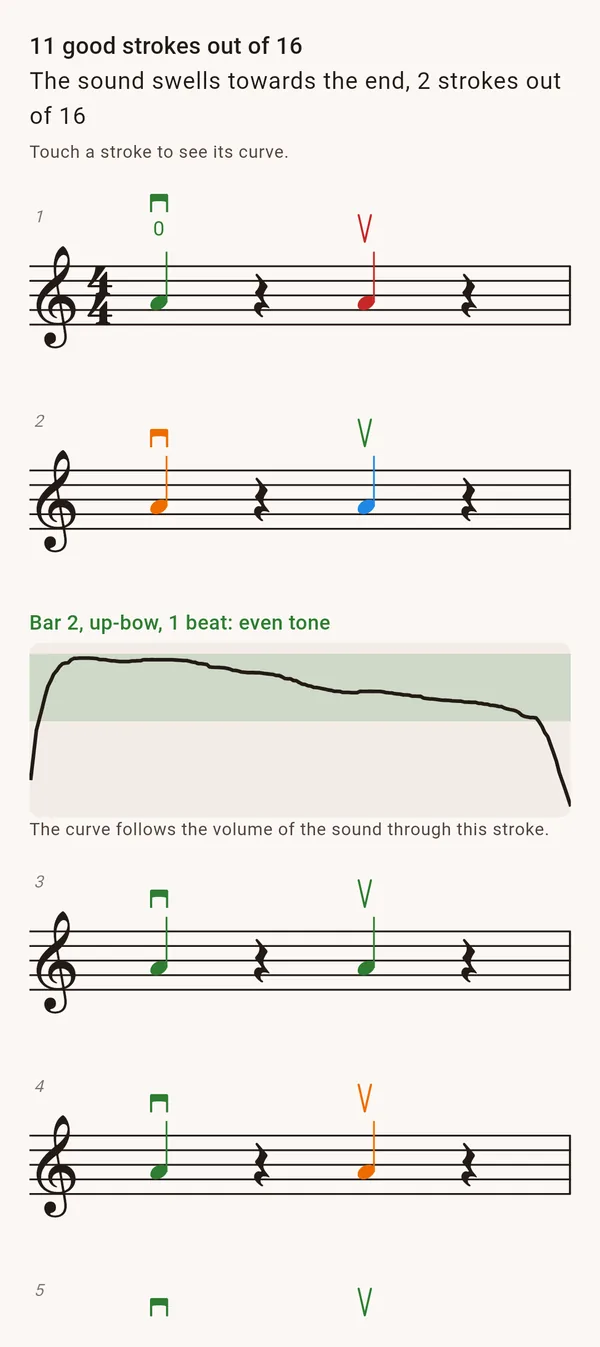
What each stroke shows
- Whether the sound stays even, swells or fades towards the end
- Whether the stroke starts on time or late
- Whether you played on the wrong string
- Dynamics: forte, piano and hairpins, judged on the volume
The bow programmes
- Sound: the whole bow, its halves, the frog and the tip, bow distribution, long notes with a crescendo and diminuendo
- String crossings: from one string to the next, then fast crossings and broken chords
- Slurs: by 2, by 4, on two strings, then by 8 and by 16
- Bow strokes: détaché, pizzicato, staccato, wrist strokes, attacks, the Viotti stroke
Read the guide: Violin string crossing exercises
Questions
How can I improve my violin tone?
With long, slow whole bows on open strings, keeping the sound even from the frog to the tip, then on notes. The curve of each stroke's volume, in Avilo, shows where the sound weakens.
What are the main violin bow strokes?
Détaché, legato (slurs), martelé, staccato, spiccato and sautillé, plus pizzicato. Avilo works détaché, pizzicato, staccato, wrist strokes, attacks and the Viotti stroke; the bouncing strokes will come later.