What you can learn alone
- Intonation and rhythm: your ear, a tuner, a metronome and an app that listens help you check them
- Reading music and the notes on the fingerboard
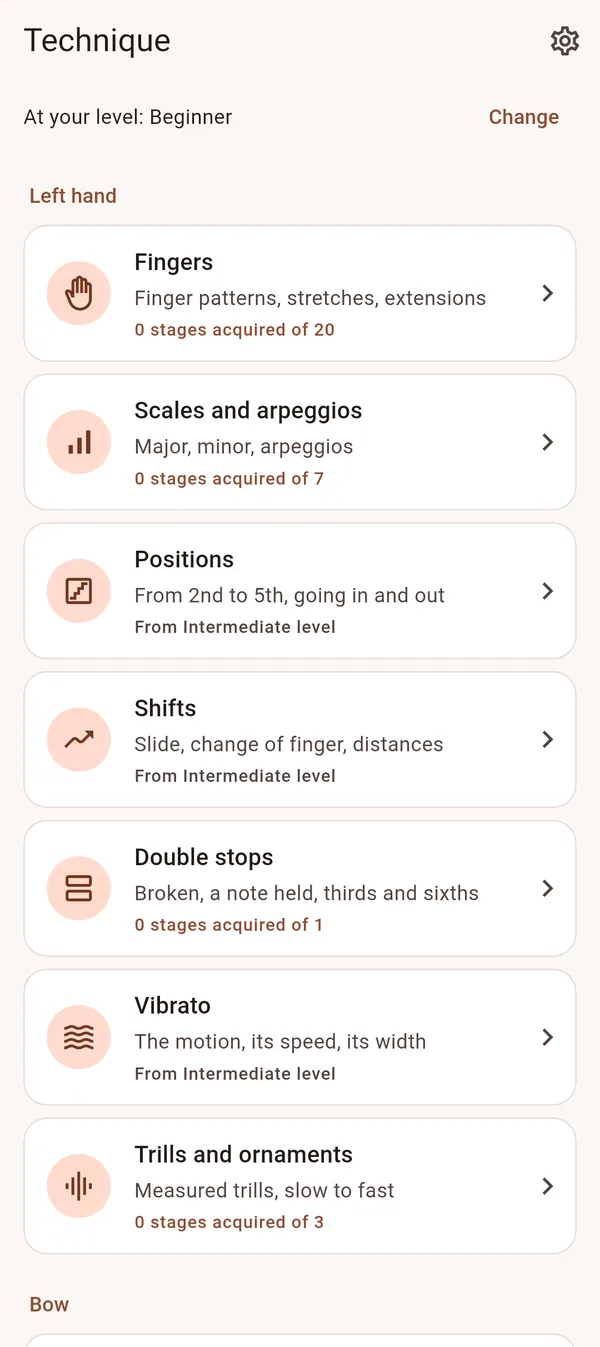
- The order of the technique, from the methods: finger patterns, scales, positions, shifts, vibrato
- Pieces and studies, at your level
What needs a teacher
The bow hold, the position of the violin, the contact point of the bow, the tension in the hands and shoulders: you cannot see them while you play, and a bad habit taken in the first months takes years to undo. A few lessons at the start, then one every few weeks or months, prevent those habits. Film yourself and use a mirror in between.
Learning as an adult
It is never too late to start. Adults have method and patience; they often lack time and lose heart at the first squeaks. Short daily sessions, clear steps and seeing progress keep you going. Expect slow progress the first months: the violin asks a lot of both hands before it sounds good.
What you need
- A violin set up properly: the right size, a fitted bridge, good strings. A luthier can check a second-hand one
- A tuner and a metronome
- A method, in order, and simple music you like
- A mute if you live with others
The order to follow
The classic methods agree on the order: the bow on open strings, then the fingers one by one in first position, the finger patterns, scales, simple tunes and studies; then third position and shifting; then vibrato. Each step is learnt slowly before the next.