Start on open strings
A new rhythm and a new finger at once are two difficulties. On open strings all your attention goes to the time. Count aloud, especially through the rests: Ševčík's bowing school asks for it from its first exercise.
The rhythms in order
The order is that of music theory classes and of the sight-reading grades of the exams:
| Level | Rhythms |
|---|---|
| Beginner | Quarters and eighths, rests, 3/4 and 2/4, ties over the bar line, dotted quarter and eighth, dotted eighth and sixteenth |
| Intermediate | 6/8, syncopations, the upbeat, off-beats, sixteenths, triplets |
| Advanced | 9/8 and 12/8, 5/8 and 7/8 counted in eighths (2 + 3, 2 + 2 + 3), two against three |
Subdivide the beat
Most rhythm mistakes come from a beat that is badly subdivided. Play one, then two, three, four and six notes per beat on an open string, without stopping between them; then change the division in disorder. When you hear the subdivision in your head, a dotted rhythm or a triplet falls into place.
Keep the tempo when the metronome goes silent
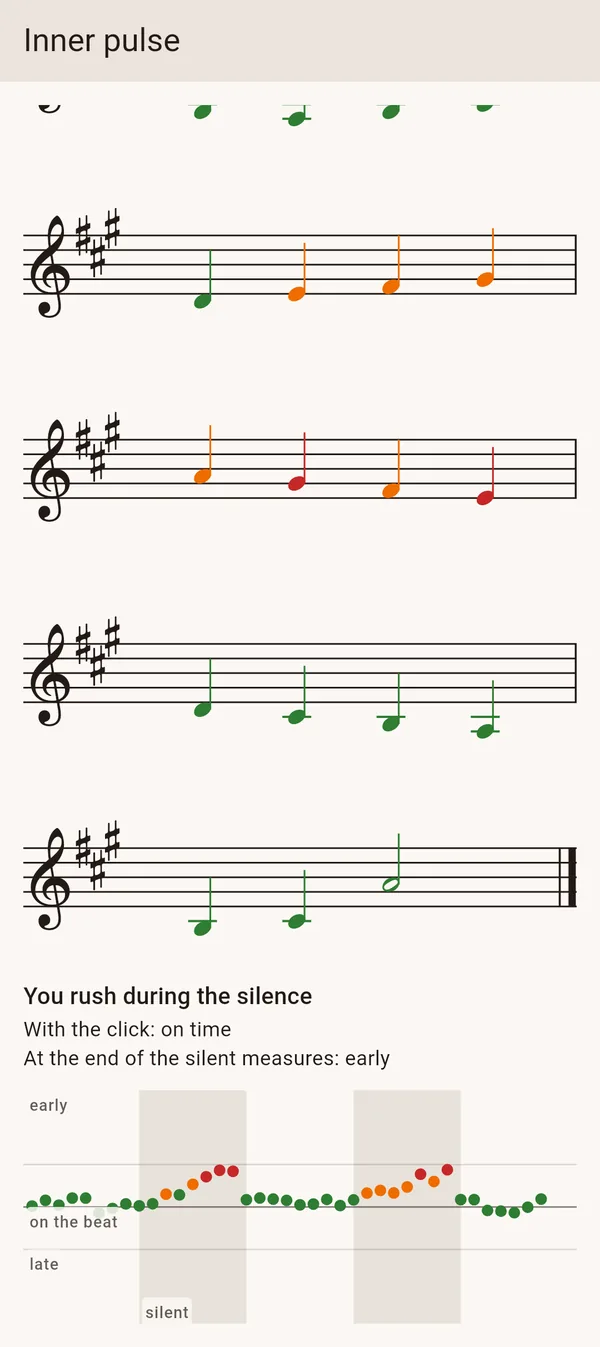
Play with a metronome long enough and you start to lean on it. To find out whether you keep the tempo alone, let the metronome play one bar, then go silent for one, two, then four bars, and see where you are when it comes back. Most players rush during the silence.
- Start with one silent bar, quarter notes on an open string
- Then two silent bars, then in eighths, then on two strings
- Then one bar heard, two silent, and four silent bars